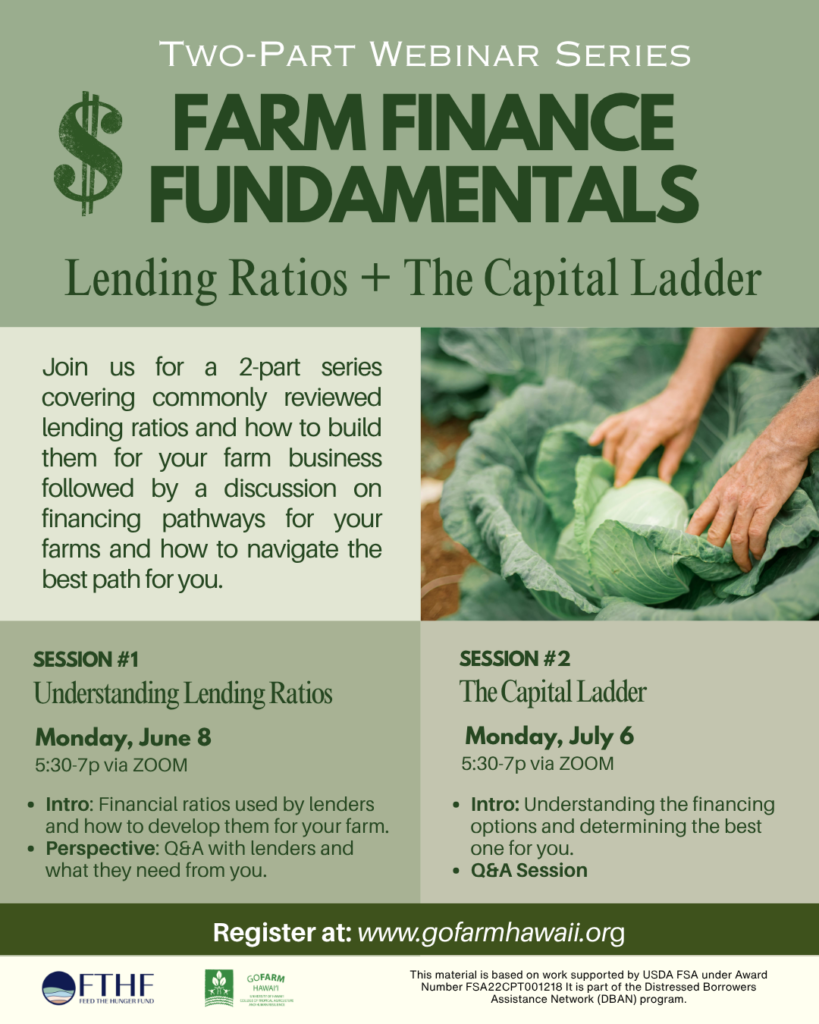
Register Here *You will automatically be registered for both sessions, but you do not need to attend both.
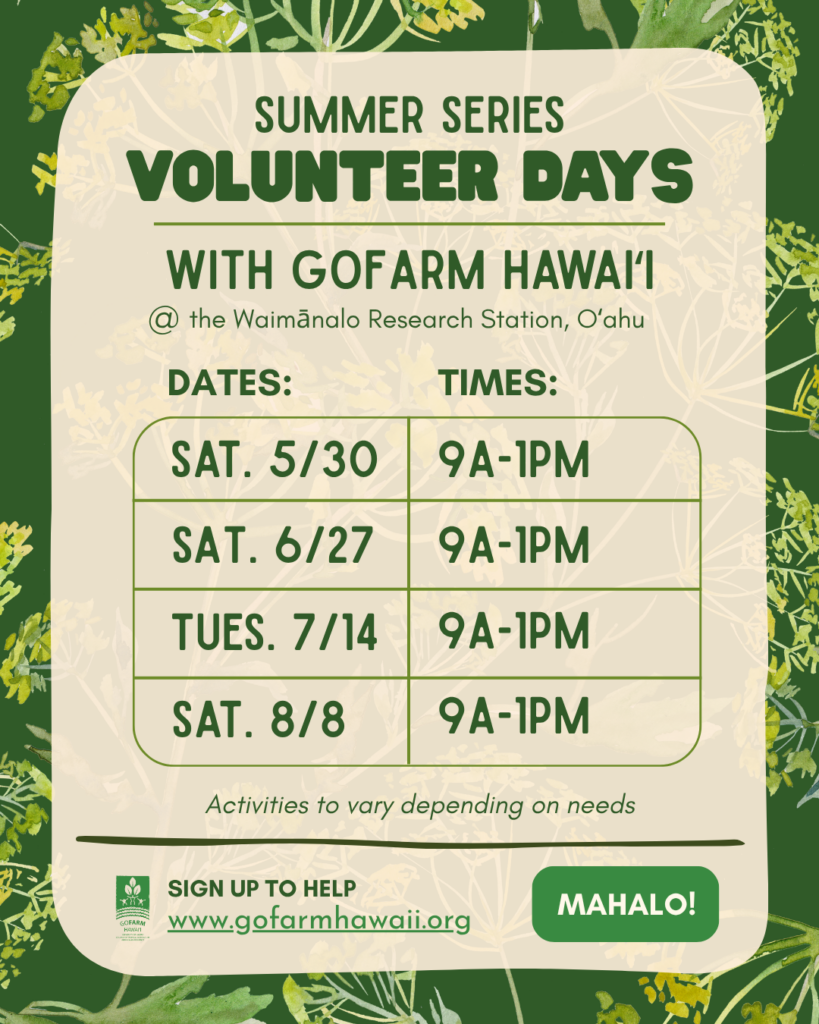
[Oʻahu] Volunteer with GoFarm
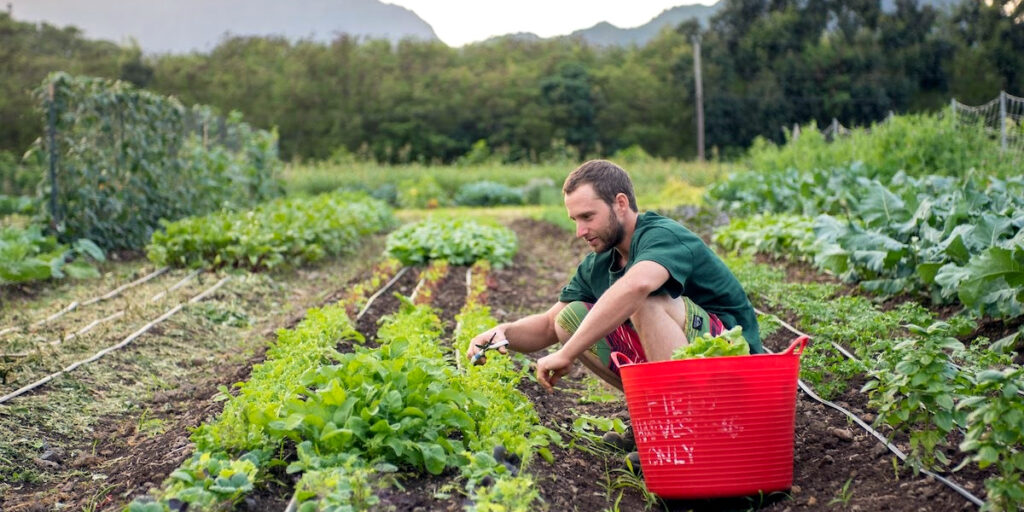
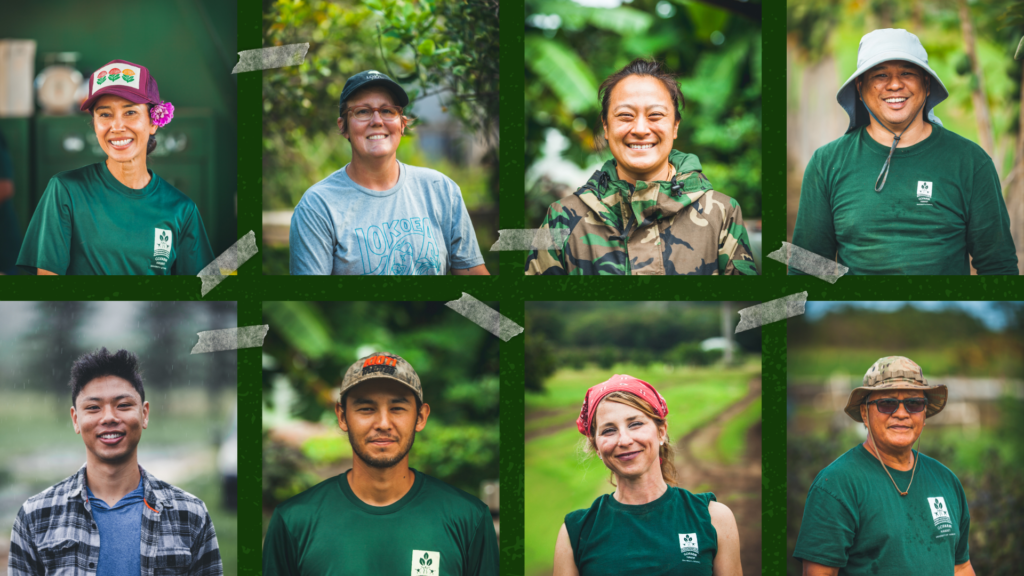
Get your hands in the dirt with us at our Waimānalo Training Site on Oʻahu! Help us with some things around the farm, learn some tips & tricks, and network with other ag-lovers.
4 volunteer days available to choose from – sign up for one, or sign up for all! We’re grateful for any help.
GoFarm Hawaiʻi is a Beginning Farmer Training Program with sites on Oʻahu, Maui, and Hawaiʻi Island. Our mission is to enhance Hawaiʻi’s food security and economy by increasing the number of sustainable, local agricultural producers by providing hands on commercial farm and business training.
For more information on the program and training opportunities:
AgBusiness Services
The GoFarm Hawaiʻi AgBusiness Team helps new and existing agribusinesses strengthen their business models with technical support in areas of finance, marketing, business planning and resources. Business assistance and consultations are available to discuss goal setting, business strategy, financial analysis, market opportunity and more.
For more information on AgBusiness Services and Resources:
Free Hawaiʻi Agribusiness Guidebook
This guidebook is a summary of important points and tips for farmers relating to the business aspects of running an agribusiness. To read more, Click Here
Want to get some tips and tricks on starting your home garden? Learn from some of our Coaches as well as our Alumni about topics like planting trees, growing leafy greens, and raising chickens.
For more videos in our GoFarm Hawaiʻi Community Edition Series, Click Here
Stay Connected!
Sign up HERE to be notified of upcoming workshops or training sessions.
In our efforts to support land access for Hawai‘i’s farmers, we work to honor the land as a living entity that nourishes and sustains our communities. We recognize that Native Hawaiians were its original stewards, and that today’s system of land access and ownership reflects a history shaped by both cultural connection and periods of displacement and loss, with land and water taken unjustly through coercion or force.
At GoFarm Hawai‘i, we approach our work with humility and a strong sense of kuleana (responsibility). We are committed to education and actions that strive for equitable, respectful stewardship of the land, guided by the Hawaiian value of mālama ‘āina (care for the land). By training new farmers with a blend of traditional wisdom and contemporary practices, we aim to nurture relationships with the land that are rooted in respect and gratitude.